Line geometry and pressure points
Walk the intended run from the start post to the last panel. Look for driveways to cross, dock aprons to skirt, and corners where traffic pushes. In local distribution environments, peak activity stacks along aisles and dock doors; a simple straight run often needs offsets to keep sightlines and turning radii clear.
Key geometry checks: - Will the line sit on consistent ground, or alternate between sand and clay? - Are there slopes, swales, or drainage features that collect water at the base? - Where will vehicles, carts, or lifts cross, and how will that load the base sections?
Footing on the Fall Line mix
Sandy stretches let bases settle under point loads, while clay can hold slippery surface water after a short storm. Expect to revise footing at transitions and corners. If the line parallels a curb on warm days, asphalt edges can soften and let bases creep, changing panel plumb. Build in room to adjust the run as conditions change.
Barricades for campus and plant work
Renovation phases at large facilities often require short, movable barricades inside and sturdier perimeter fencing outside. Interior barricades need tight turning clearance and minimal trip edges. Exterior fencing should account for uneven pads near temporary staging and laydown. Where the line approaches busy gates, preserve sightlines for incoming trucks.
Weather and durability
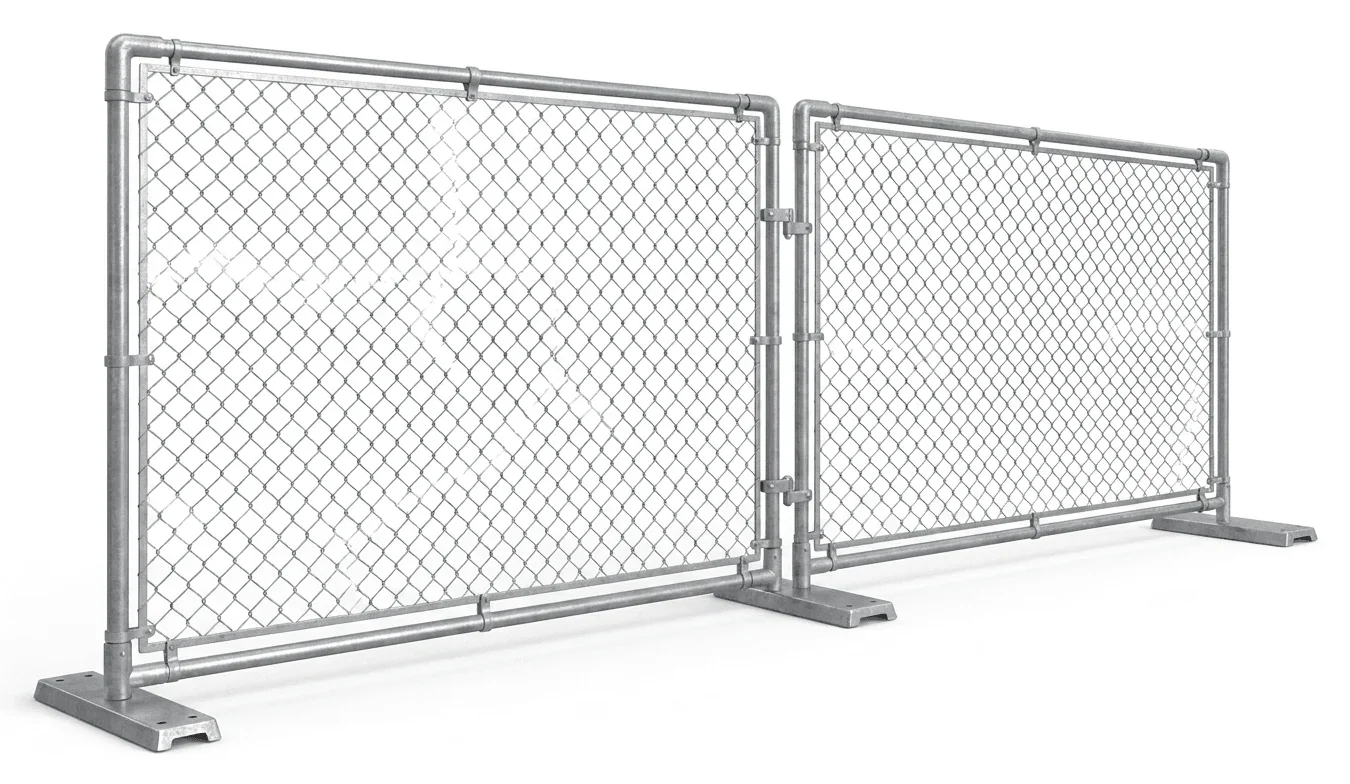
The regional climate brings heat, humidity, and quick storms that test connectors and feet. Plan for drainage under panels and check that any weighted bases do not concentrate load on soft spots along sandy shoulders. For multi-week runs, expect to revisit panel alignment after heavy afternoon showers.
Related planning: - Night work support: /generators-light-towers-rental/ - Lift access next to fenced zones: /aerial-lift-rental/ - Product overview: /products/ - Discuss site layout: /contact/